Kingwood Underground
the heart and soul of our Kingwood, Texas family
Login - Create Account - Help
Clean out your garage on Kingwood bookoo! Or find local garage sales on Yard Sale Search.com
KU Live!

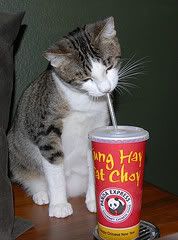
NYC lpoking to ban sugary drinks over 16oz

who's talking here?

planemom 1
iwaveatcows 1
Tylers Journey 2
Rubicon 1
SoupIsGoodFood 1
ghostpost 3
rEVOLution 1
Perfection 4
Laurabeth 1
voice of reason 1
ladyjane 1
TexasOma 1
TheMasticator 3
Work in Progress 6
Puss In Boots 1
SagaciousSighFiGurl 3
MandyPants 2
txsassy 1
Infidel II 1
atthebeach 1

     » send to friend     » save in my favorites     » flag dangerous topic flag as a dangerous topic

Perfection --- 14 years ago -

Big Brother much? 

TexasOma --- 14 years ago -

Nanny state!

What is to stop someone from buying 2 of the smaller drinks? Are the drink police going to follow you around & issue a fine?

Maybe NYC should spend their efforts focused on crime. 

atthebeach --- 14 years ago -

When are people going to be held accountable for their own choices?? I constantly try to steer my children away from sodas/energy drinks. It is a pain the rear because I feel like I am constantly nagging but after having them come to me for MY water because their drinks are too sweet I know deep down they are actually hearing me. 

SoupIsGoodFood --- 14 years ago -

When are people going to be held accountable for their own choices??

This is a concept absolutely foreign to the liberal mindset. 

TheMasticator --- 14 years ago -

.... and we warned you of this when they started banning smoking..... 

Work in Progress --- 14 years ago -

Seriously getting crazy up in here! 

Puss In Boots --- 14 years ago -

Whut?!

0 

Tylers Journey --- 14 years ago -

I don't have a problem with them not selling it but I have a problem with them telling us what we can or can't have. I think soda and sugary fruit juices shouldn't be sold or given to kids. 

Work in Progress --- 14 years ago -

I think soda and sugary fruit juices shouldn't be sold or given to kids.

I don't think that your kids should watch certain TV shows, so I'll have them banned. I mean, where does it stop? I mean, at some point, you have to raise your kids. 

SagaciousSighFiGurl (Mod) --- 14 years ago -

People should be allowed to pick their own poison.

It's what freedom is really about. :P 

TheMasticator --- 14 years ago -

I mean, at some point, you have to raise your kids.

There is where you part philosophically with many Americans.... They believe they can parent better than you and seek to enforce through government....

But this is not just about the government taking care of kids, it is about seeking infantilize all Americans. 

Tylers Journey --- 14 years ago -

I think soda and sugary fruit juices shouldn't be sold or given to kids.

I don't think that your kids should watch certain TV shows, so I'll have them banned. I mean, where does it stop? I mean, at some point, you have to raise your kids.


Sugar is a drug and it is addictive. My kids don't get soda or juice that isn't 100% real fruit juice. My kids are told to go out to play and have a healthy lifestyle. My kids get tv for about 30 minutes when they get up and about 30 minutes before bed. 

Perfection --- 14 years ago -

Who was it that said.......

It takes a village???? 

iwaveatcows --- 14 years ago -

exactly TexasOma 

SagaciousSighFiGurl (Mod) --- 14 years ago -

It takes a village????


Hillary Clinton, and she had a point.. 

Perfection --- 14 years ago -

So Mayor Bloomberg is the head of the village so he is making the rules for how children should be raised.

Guess the elder white man knows best. 

TheMasticator --- 14 years ago -

Sugar is a drug and it is addictive.

Absurd statement... did you think about it before you wrote it?

So Mayor Bloomberg is the head of the village so he is making the rules for how children should be raised.

Not just children... How Everybody in New York should behave. 

Perfection --- 14 years ago -

Not just children... How Everybody in New York should behave.


True, my bad.

He does know best. He has the money to prove it. 

ghostpost --- 14 years ago -

Maybe NYC should spend their efforts focused on crime.

Actually, the crime rate there is low compared to many cities. Since 1985 the crime rate has been the lowest of the 25 largest cities in the US. I feel safer walking there at night than I do in Houston.

I don't think banning sugary drinks will impact the health problems. Some argue that this isn't any different than controlling alcohol or tobacco products I don't see that controlling this single product is the solution.

Sugar is an issue in our diet, no question. One could argue that our children are being poisoned by it.

But my biggest concern are the products that contains high amounts of sugar that we aren't even that aware of..like processed foods.

People think they are giving their children something somewhat healthy to eat but it is flavored enhanced and sugar laden and they don't even realize it. Our tastebuds are conditioned to crave sweet foods and processed sugars.

Our entire diet and convenience food products is the problem not just a soft drink at a fast food joint. 

Work in Progress --- 14 years ago -

But the point is, A LOT of things aren't good for you, but should they be banned?

At what point has the government overstepped its boundaries?

Watching TV, not good for you. Maybe the government should approve which shows are "healthier" and perhaps a time limit on how much you can watch. Meat? Maybe the government should ban the sale of red meat. Push fish on the people! Perhaps we should make all carbs illegal to sell. They are addictive after all. 

ghostpost --- 14 years ago -

But the point is, A LOT of things aren't good for you, but should they be banned?

At what point has the government overstepped its boundaries?


It is actually a harder issue than it seems. What about the FDA? Some could argue that they need to go away then. What about marijuana..tobacco...alcohol? Some could argue that sugar is just as dangerous.

I don't want to see the government monitoring my shopping list either. In fact, I am probably more about personal choice than you are.

But it was interesting (and alarming) when I lived in Europe the number of imports from the US that were not allowed because of the additives and the health factor.

I am concerned that this nation is poisoning itself and that our children are going to have diabetes at greater and greater numbers.

I think we have a big problem and I am not saying I have the solution..but I do know that "healthy" and "low fat" labels are meaningless in our country. 

Work in Progress --- 14 years ago -

I think it's basically a moot point. If you only knew what was going into your food due to transgenic crop manipulation, and what THAT could do not only to you, but to your offspring, you would understand that sugar is the least of our worries.

But the Frankenfoods? That scares me. 

ghostpost --- 14 years ago -

If you only knew what was going into your food due to transgenic crop manipulation, and what THAT could do not only to you, but to your offspring, you would understand that sugar is the least of our worries.


No doubt about that. My offspring is grown and take much better care of their bodies than I do mine, so I don't worry about them and their diets, but if I had babies or young children I would be concerned about what I was feeding them..and probably much more vigilant. 

Work in Progress --- 14 years ago -

Unfortunately, with the Frankenfoods, you can't be vigilant. They don't have to disclose which foods have been genetically modified. And because life reproduces, crops that were not modified are becoming contaminated with the germination of crops that WERE modified. So it's just a matter of time before it's ALL Frankenfood.

And just for fun, look up what happens to the animals who have eaten it. . . 

voice of reason --- 14 years ago -

I don't have a problem with them not selling it but I have a problem with them telling us what we can or can't have.


so do i in regards to abortions!
amen sis! 

Infidel II --- 14 years ago -

I am a little skeptical that genetically engineered crops (referred to as "Frankenfoods" by their detractors as a scare tactic) are anything to worry about. Most scientists have found that it produces more food, has less impact on the environment and uses less pesticides. We would have had far more starvation in the developing world without GE modified food. From the National Academy of Science (http://www8.nationalacademies.org/onpinews/newsitem.aspx?RecordID=12804)

"News from the National Academies

Read Full Report
Powerpoint Presentation
Report in Brief
Listen to the Briefing
Photos

Date: April 13, 2010

Contacts: Jennifer Walsh, Media Relations Officer

Molly Galvin, Senior Media Relations Officer

Alison Burnette, Media Relations Assistant

Office of News and Public Information

202-334-2138; e-mail


Genetically Engineered Crops Benefit Many Farmers,
But The Technology Needs Proper Management to Remain Effective


WASHINGTON -- Many U.S. farmers who grow genetically engineered (GE) crops are realizing substantial economic and environmental benefits -- such as lower production costs, fewer pest problems, reduced use of pesticides, and better yields -- compared with conventional crops, says a new report from the National Research Council. However, GE crops resistant to the herbicide glyphosate -- a main component in Roundup and other commercial weed killers -- could develop more weed problems as weeds evolve their own resistance to glyphosate. GE crops could lose their effectiveness unless farmers also use other proven weed and insect management practices.


The report provides the first comprehensive assessment of how GE crops are affecting all U.S. farmers, including those who grow conventional or organic crops. The new report follows several previous Research Council reports that examined the potential human health and environmental effects of GE crops.


"Many American farmers are enjoying higher profits due to the widespread use of certain genetically engineered crops and are reducing environmental impacts on and off the farm," said David Ervin, professor of environmental management and economics, Portland State University, Portland, Ore., and chair of the committee that wrote the report. "However, these benefits are not universal for all farmers. And as more GE traits are developed and incorporated into a larger variety of crops, it's increasingly essential that we gain a better understanding of how genetic engineering technology will affect U.S. agriculture and the environment now and in the future. Such gaps in our knowledge are preventing a full assessment of the environmental, economic, and other impacts of GE crops on farm sustainability."


First introduced in 1996, genetically engineered crops now constitute more than 80 percent of soybeans, corn, and cotton grown in the United States. GE soybeans, corn, and cotton are designed to be resistant to the herbicide glyphosate, which has fewer adverse environmental effects compared with most other herbicides used to control weeds. In addition to glyphosate resistance, GE corn and cotton plants also are designed to produce Bacillus thuringiensis (Bt), a bacterium that is deadly when ingested by susceptible insect pests.


Farmers need to adopt better management practices to ensure that beneficial environmental effects of GE crops continue, the report says. In particular, farmers who grow GE herbicide-resistant crops should not rely exclusively on glyphosate and need to incorporate a range of weed management practices, including using other herbicide mixes. To date, at least nine species of weeds in the United States have evolved resistance to glyphosate since GE crops were introduced, largely because of repeated exposure. Federal and state government agencies, technology developers, universities, and other stakeholders should collaborate to document weed resistance problems and develop cost-effective ways to control weeds in current GE crops and new types of GE herbicide-resistant plants now under development.


Environmental Benefits


Improvements in water quality could prove to be the largest single benefit of GE crops, the report says. Insecticide use has declined since GE crops were introduced, and farmers who grow GE crops use fewer insecticides and herbicides that linger in soil and waterways. In addition, farmers who grow herbicide-resistant crops till less often to control weeds and are more likely to practice conservation tillage, which improves soil quality and water filtration and reduces erosion.


However, no infrastructure exists to track and analyze the effects that GE crops may have on water quality. The U.S. Geological Survey, along with other federal and state environmental agencies, should be provided with financial resources to document effects of GE crops on U.S. watersheds.


The report notes that although two types of insects have developed resistance to Bt, there have been few economic or agronomic consequences from resistance. Practices to prevent insects from developing resistance should continue, such as an EPA-mandated strategy that requires farmers to plant a certain amount of conventional plants alongside Bt plants in "refuge" areas.


Economic and Social Effects


In many cases, farmers who have adopted the use of GE crops have either lower production costs or higher yields, or sometimes both, due to more cost-effective weed and insect control and fewer losses from insect damage, the report says. Although these farmers have gained such economic benefits, more research is needed on the extent to which these advantages will change as pests adapt to GE crops, other countries adopt genetic engineering technology, and more GE traits are incorporated into existing and new crops.


The higher costs associated with GE seeds are not always offset financially by lower production costs or higher yields, the report notes. For example, farmers in areas with fewer weed and pest problems may not have as much improvement in terms of reducing crop losses. Even so, studies show that farmers value the greater flexibility in pesticide spraying that GE crops provide and the increased safety for workers from less exposure to harmful pesticides.


The economic effects of GE crops on farmers who grow organic and conventional crops also need further study, the report says. For instance, organic farmers are profiting by marketing their crops as free of GE traits, but their crops' value could be jeopardized if genes from GE crops flow to non-GE varieties through cross-pollination or seed mingling.


Farmers have not been adversely affected by the proprietary terms involved in patent-protected GE seeds, the report says. However, some farmers have expressed concern that consolidation of the U.S. seed market will make it harder to purchase conventional seeds or those that have only specific GE traits. With the exception of the issue of seed industry consolidation, the effects of GE crops on other social factors of farming -- such as labor dynamics, farm structure, or community viability -- have largely been overlooked, the report says. More research is needed on the range of effects GE crops have on all farmers, including those who don't grow GE crops or farmers with less access to credit. Studies also should examine impacts on industries that rely on GE products, such as the livestock industry.


Research institutions should receive government support to develop GE traits that could deliver valuable public benefits but provide little market incentive for the private sector to develop. Examples include plants that decrease the likelihood of off-farm water pollution or plants that are resilient to changing climate conditions. Intellectual property that has been patented in developing major crops should be made available for these purposes whenever possible.


The study was funded by the National Research Council. The National Academy of Sciences, National Academy of Engineering, Institute of Medicine, and National Research Council make up the National Academies. They are independent, nonprofit institutions that provide science, technology, and health policy advice under an 1863 congressional charter. Committee members, who serve pro bono as volunteers, are chosen by the Academies for each study based on their expertise and experience and must satisfy the Academies' conflict-of-interest standards. The resulting consensus reports undergo external peer review before completion. For more information, visit http://national-academies.org/studycommitteprocess.pdf. A committee roster follows.


Copies of The Impact of Genetically Engineered Crops on Farm Sustainability in the United States are available from the National Academies Press; tel. 202-334-3313 or 1-800-624-6242 or on the Internet at http://www.nap.edu. Reporters may obtain a copy from the Office of News and Public Information (contacts listed above)." 

Laurabeth --- 14 years ago -

Sugar is a drug and it is addictive.

Absurd statement... did you think about it before you wrote it?


You should do some research......... 

planemom --- 14 years ago -

If somebody wants to drink more than 16 oz of soda at a movie or restaurant all they will do is order 2 drinks instead of one. 

ladyjane --- 14 years ago -

[i]I don't have a problem with them not selling it but I have a problem with them telling us what we can or can't have.


You'd really just that easily give up your freedom to sell slushies? 

Rubicon --- 14 years ago -

It takes a village????


Hillary Clinton, and she had a point..


That's an old proverb. Hillary didn't make it up.


You can't tell people how much soda they can drink! That's crazy. It's also crazy how much bigger the size the sodas have become over the years. 

MandyPants --- 14 years ago -

You can't tell people how much soda they can drink! That's crazy. It's also crazy how much bigger the size the sodas have become over the years. 

You can when you are paying for their healthcare. This is just the beginning. Mandatory exercise is just around the corner. 

txsassy --- 14 years ago -

You can't tell people how much soda they can drink! That's crazy. It's also crazy how much bigger the size the sodas have become over the years.

Yes you can. You can also tell them to get off their fat duffs, to eat right.

It's high time, since American parents are the worst offenders.

These foods are poison. Wake up.

I guess we shouldn't have let people know the cigarette companies were lying? 

Work in Progress --- 14 years ago -

This is not going to end well. . .I had good parents, I don't need the government to babysit me. 

SagaciousSighFiGurl (Mod) --- 14 years ago -

I don't think soda should be sold at school. Kids are minors, under the supervision and authority of their parents. And school isn't a night club, they are there to learn and being dosed up on sugar is totally counterproductive. It IS totally addicting, that's a fact.

That being said, this is a huge slippery slope. I think the truth is, the downfall to a free society is the ramifications of freedom...to do yourself harm. 

MandyPants --- 14 years ago -

I don't think soda should be sold at school. Kids are minors, under the supervision and authority of their parents. And school isn't a night club, they are there to learn and being dosed up on sugar is totally counterproductive. It IS totally addicting, that's a fact.

Agreed. 

rEVOLution --- 14 years ago -

Americans care more about soda than FISA


page 1
Login to add your comments!

see more discussions about...


Online now:
hit counters

Terms of Service - Privacy Policy - Ice Box

Kingwood Underground