Kingwood Underground
the heart and soul of our Kingwood, Texas family
Login - Create Account - Help
Clean out your garage on Kingwood bookoo! Or find local garage sales on Yard Sale Search.com
KU Live!

*Remember that warning about bisphenol A (BPA) in baby bottles? Guess what?

who's talking here?

lizandmike 1
rEVOLution 5
JusticeForAll 1
Squareduck 1
Jilleemonster 1

     » send to friend     » save in my favorites     » flag dangerous topic flag as a dangerous topic

rEVOLution --- 16 years ago -

It's not only in baby bottles but it's also in every single aluminum can, Tupperware, and many, many other products. See the videos below to understand the threat to our health.

what can we do? Like anything else these days, Spread the word, do the research, and eventually enough people will stop buying these toxic products to make a difference.


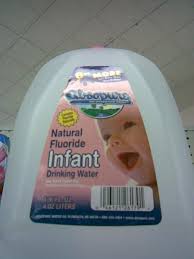
Their even promoting fluoridated water for children and infants KNOWING that recent research has found that it's poisoning our kids and us. Several countries have already moved to stop putting it in their water supplies.


0

0 

JusticeForAll --- 16 years ago -

Tupperware

do you realize how long Tupperware has been around? My grandmother used it her ENTIRE LIFE (well, from the time it was invented...lol) and she's 91.

History of Tupperware:

Company history

Tupperware was developed in 1946 by Earl Silas Tupper (1907–1983) in the USA. He developed plastic containers used in households to contain food and keep it airtight. The formerly patented "burping seal" is a famous aspect of Tupperware, which distinguished it from competitors.
Tupperware pioneered the direct marketing strategy made famous by the Tupperware party. Brownie Wise (1913–1992), a former sales representative of Stanley Home Products, developed the strategy. During the early 1950s, Tupperware's sales and popularity exploded, thanks in large part to Wise's influence among women who sold Tupperware, and some of the famous "jubilees" celebrating the success of Tupperware ladies at lavish and outlandishly themed parties. Tupperware was known—at a time when women came back from working during World War II only to be told to "go back to the kitchen"—as a method of empowering women, and giving them a toehold in the post-war business world. The tradition of Tupperware's "Jubilee" style events continues to this day, with rallies being held in major cities to recognize and reward top-selling and top-recruiting individuals, teams, and organizations.
In 1958, Earl Tupper fired Brownie Wise over general difference of opinion in the Tupperware business operation. It is believed that Tupper objected to the expenses incurred by the jubilee and other similar celebrations of Tupperware.[2]
Tupperware spread to Europe in 1960 when Mila Pond hosted a Tupperware party in Weybridge, England, and subsequently around the world. In 2003, Tupperware closed down operations in the UK, citing customer dissatisfaction with their direct sales model as an issue,[3] and relaunched after a restructuring in 2005.[citation needed]
Rexall bought Tupperware in 1958. Rexall sold its namesake drugstores in 1977, and renamed itself Dart Industries. Dart merged with Kraftco to form Dart & Kraft. The company demerged, with the former Dart assets named Premark International. Tupperware Brands was spun off from Premark in 1996; Premark was acquired by Illinois Tool Works three years later.
Tupperware is now sold in almost 100 countries, after peaking at more than a hundred after 1996.
 

Squareduck --- 16 years ago -

My mom used Tupperware, as did her mother and my grandmas mother. My great grandma just died she was 98 years old. Tupperware has been around forever and a day. Heck I saw some crazy 70s color Tupperware in my moms cabinet on my most recent visit to CA. My mom said she has had it since she got married. That thing is old! :) 

rEVOLution --- 16 years ago -

This is NOT your Mother's tupperware. While tupperware is one of the lesser of the offenders, some of their products do still contain BPA that when reheated vaporizes into food.

http://medheadlines.com/2008/05/19/tupperware-identifies-plastics-with-bpa-in-its-product-line/

We think it took quite a bit of consumer prodding after the news of bisphenol-A hit, but we’re thrilled that Tupperware has released a chart that identifies the types of plastics used in its product line. A link to the chart is posted after the jump.


Tupperware representatives got in touch with us to report that a material identification chart had been posted online. A quick look reveals that a number of collections - Ice Prisms, Microsteamer, Microwave Cooker and others - are made of polycarbonate plastic (the type the National Toxicology Program report has flagged as having “some concern” for leaching bisphenol-A). The majority of Tupperware products, though, are apparently made of polypropylene, LDPE and other plastics thought to be safe.

Until now, consumers were expressing great concern because Tupperware doesn’t imprint recycling codes on the bottom of its product - so there was no way to know which might contain polycarbonate. Tupperware says it’s because its products “contain a lifetime guarantee and were not originally intended for recycling.”

While that sounds like a bit of spin, we’re happy to hear that brand saying it’ll begin to “systematically” imprint the recycling codes on all products. Tupperware also says it doesn’t sell baby bottles in the United States and Canada, nor does it use polycarbonate (marked as a #7 plastic) bottles in any of its children’s products, which include Dora the Explorer, SpongeBob SquarePants and Disney-themed lines. 

rEVOLution --- 16 years ago -

Besides the tupperware, the real concern is Everything else that BPA is in. If we were only being bombarded by one toxin from one product it might not be that big of a deal but researchers are finding that we are being bombarded from nearly every product we come in contact with on a daily basis.

I'm not saying the sky is falling, our bodies are amazingly tolerant. But I am saying that people need to know the truth about what they are ingesting and feeding their children. Some people react differently to these toxins. While it might hurt one person, another person might not see effects for years. 

Jilleemonster --- 16 years ago -

Did you that plastic bottles and aluminum have less bpa by 1000x then receipts from grocery stores and gas stations and resturants and shopping stores!!!! Who would of known! So just grabbing a receipt is putting toxins in your body! 

lizandmike --- 16 years ago -

As a general rule, I try to avoid putting anything plastic into the microwave. You never know for sure. 

rEVOLution --- 16 years ago -

Did you that plastic bottles and aluminum have less bpa by 1000x then receipts from grocery stores and gas stations and restaurants and shopping stores!!!! Who would of known! So just grabbing a receipt is putting toxins in your body!

That was kind of my point, we are being bombarded from every direction. And for no reason, they don't have to put this stuff in products. Not if they cared about our health.

We can't even grow an organic garden because the water we use has so many toxins in it. Granted they may be in minute numbers in some areas but watering on a daily basis is bombarding our gardens with fluoride and other toxic chemicals.

Here's an article a friend sent me.

U.S. girls are entering puberty at a younger age than in the past. More than 10 percent of white 7-year-old girls have breast changes that signal the start of puberty, according to a study conducted in the mid-2000s. This is up from just 5 percent in the early 1990s.

The average age of a girl's first period also declined, from an average of 14 or 15 years in the past to about 12 years today.

CNN reported:

"Experts aren't sure what's behind the increase in earlier puberty, but it's likely due to a combination of factors, including the childhood obesity epidemic and substances in the environment.

Early puberty in girls is a growing public health concern because studies have shown that girls who start puberty earlier are more likely to develop breast and uterine cancer later in life …

Early development in girls has been linked with poor self-esteem, eating disorders, and depression, as well as cigarette and alcohol use and earlier sexual activity."

As for what's causing the increasing in early puberty, chemicals in the environment, obesity, and above-average weight gain during infancy are all being considered as possible factors.


Dr. Mercola's Comments:

Follow me on twitter Follow me on facebook

You're hearing quite a bit about precocious puberty these days, and I believe the data is indicative of a public health disaster yet to come.

Why?

Because the earlier you enter puberty, the longer you're exposed to elevated levels of the female hormone estrogen, which is a risk factor for certain cancers such as breast cancer. Time will tell whether or not estrogen-related cancer rates will rise dramatically as the current generation of youngsters enters adulthood and middle age, but there's certainly that risk.

The study published in Pediatrics at the beginning of this month compared results from two previous studies that used breast development to gauge the beginning of puberty. One was conducted in the early 1990s and the other about five years ago.. In that time span, the rate of white 7-year-old girls entering puberty doubled, from five percent to more than 10 percent.

Black and Hispanic girls are, on average, maturing at an even faster rate, with nearly 25 percent of black girls and 15 percent of Hispanic girls entering puberty by age seven!

The average age of the first period has declined as well. In the 19th century the onset of menstruation occurred around the age of 15. Now the average age of the first period is around 12.

There's no denying that something odd is afoot. The question is, will our government and health agencies do anything about it? So far, efforts to reduce the public's exposure to the most obvious contributors have been successfully suppressed by industry interests...

What's Causing Precocious Puberty?

Scientists have brought forth a number of potential explanations, and in all likelihood it's a combination of factors, such as:

* Hormones in food
* Pesticides in produce
* Obesity (which exposes girls to more estrogen because estrogen is stored in fat tissue)
* Phthalates in plastics and cosmetics

It's now a well-established fact that commonly used plastic chemicals, such as bisphenol A and phthalates, disrupt the human endocrine-system and affect your hormones, which control development and function in your body.

There's also mounting evidence that these chemicals can cause developmental harm in fetuses and children, either through active exposure during pregnancy and/or while nursing, or due to the preexisting toxic load of the mother.

Unfortunately, it's near impossible to actually study and test these factors because we're surrounded by so many estrogen-like chemicals, there are virtually no 'clean' control populations with which to compare!

It is truly a sad testament to the level of chronic toxicity we humans now live in.

However, although we may not be able to determine the exact extent of damage caused by each individual factor, you can protect your health, and the health of your family, by paying closer attention to your lifestyle choices in general.

Your Food Choices are of Paramount Importance

Obesity, hormones and pesticide residues in your food, and precocious puberty can be viewed as a linked triad.

Overweight children have elevated levels of insulin, an increased ability to convert hormones into estrogen, and an increased ability to store environmental toxins, all of which may contribute to early puberty. But obesity is not a cause of early puberty in and of itself.

It is, however, directly linked to diet, and the primary reason why diet may be a driving factor behind the early puberty phenomenon is the excessive use of hormones and other estrogen-mimicking chemicals in livestock and dairy production.

The US FDA currently allows six different kinds of steroid hormones to be used in food production.

1. Estradiol -- natural female sex hormone
2. Progesterone -- natural female sex hormone
3. Testosterone – natural male sex hormone
4. Zeranol – synthetic growth promoter
5. Trenbolone acetate– synthetic growth promoter
6. Melengestrol acetate– synthetic growth promoter

Federal regulations allow these to be used to 'beef up' cattle and sheep, but not poultry or pigs.

In addition to these types of growth hormones, most conventional meats are also heavily contaminated with pesticides, courtesy of the cattle's grain- and corn-based diet.

Avoid Non Organic Meats and Dairy as They are Loaded With Puberty Inducing Chemicals

This is why I only promote eating organically raised and grass-fed meats.

Despite the difficulty testing the impact of factors such as hormones in food on precocious puberty, studies have been able to discern a distinct dose relationship.

A recent study published in the journal Public Health Nutrition, for example, found that 49 percent of girls who ate meat 12 times a week at the age of 7 had reached puberty by the age of 12 1/2, compared with 35 percent of those who ate meat four times a week or less.

This at least will give you an inkling of how hormone-laced meat alone can alter your child's development.

But meat is not the only food group capable of wreaking havoc on your child's delicate hormonal balance.

Dairy is another major source.

The genetically engineered recombinant bovine growth hormone (rBGH or rBST) is permitted to be used on dairy cows to increase milk production, despite the fact that rBGH-containing milk contains high levels of a natural growth factor (IGF-1), which has also been incriminated as a major cause of breast, colon, and prostate cancers.

Unfortunately, labeling is not required by law. Some brands will state that their milk is "rBGH-free" however, and organic dairies also do not use rBGH. Either of these are certainly preferable to milk that contains this dangerous hormone, but I still don't recommend drinking any kind of pasteurized milk, organic or otherwise.

You can avoid both the risks of rBGH and pasteurization by only drinking raw milk, preferably from a trusted local farmer. This is really the only milk worth drinking if you want to protect your health and certainly that of your growing children.

The So-Called 'Health Food' that Wreaks Havoc on Your Hormones

I'm talking about unfermented soy in its many varieties.

Yes, this so-called "health food" is anything but healthy, especially for infants and children. Sadly, some misinformed moms feed their vulnerable babies soy infant formula, which exposes their child to the equivalent of five birth control pills' worth of estrogen every day!

It's also important for pregnant women to avoid eating non-fermented soy, as a high estrogenic environment in utero may increase their child's subsequent breast cancer risk.

Also keep in mind that soy is present in virtually every processed food and that over 95 percent of soy is GMO, which has its own set of health risks.

Americans are consuming soy in unprecedented quantities. Limiting or eliminating processed foods from your family's diet would clearly be one of the best health investments you could ever make, for a number of reasons besides reducing your soy intake.

The Harmful "Yin and Yang" of the Gender-Bender Chemicals

We now know that plastics contain a number of estrogen-mimicking chemicals that easily leach out, contaminating everything it touches, such as food and beverages.

Two of the most studied chemical types in this group are bisphenol A (BPA) and phthalates, which could be viewed as the yin and yang of harmful plastic chemicals.

BPA acts as a synthetic estrogen (female hormone) while phthalates have increasingly become associated with reduced testosterone (male hormone) in both babies and adults, along with developmental changes in the male brain, genital defects, and metabolic abnormalities.

BPA is typically found in more rigid plastic products and containers (as well as the lining of cans), while phthalates are a typical ingredient in softer, more pliable plastics.

These two are some of the most pervasive 'gender-bender' chemicals we know of. BPA, for example, has been detected in the umbilical cord blood of 90 percent of newborn infants tested.

If you look around your house, you're likely to find either or both of these chemicals in abundance, unless you've gone really "green."

Avoiding BPA-containing plastic products is an important step to limit your BPA exposure. Remember, this chemical is typically found in food and beverage containers, and has been shown to leech into whatever food or beverage it comes in contact with. Ridding your household of these items is therefore especially important if you're pregnant, planning a pregnancy, or have young children.

For more information about BPA and tips on how to avoid it, please review this previous article.

Avoiding phthalates is a bit trickier as these chemicals can be found in an even more diverse array of products – everything from toys, to floors, detergents, personal care products and cosmetics, just to name a few.

For more on phthalates and potential sources to avoid, please see this link.

Tips to Avoid the Most Pervasive Gender-Bender Chemicals

There are about 75,000 chemicals regularly manufactured and imported by U.S. industries – the vast majority of which have never been tested for safety. Rather than compile an endless list of what you should avoid, it's far easier to focus on what to do to minimize your exposure.

Here are 11 measures you can implement right away to protect yourself and your children from common toxic substances that could cause precocious puberty and long-term health problems:

1. As much as possible, buy and eat organic produce and free-range, organic meats to reduce your exposure to added hormones, pesticides and fertilizers.
2. Eat mostly raw, fresh foods. Processed, prepackaged foods (of all kinds) are a major source of soy and chemicals such as BPA and phthalates.
3. Store your food and beverages in glass rather than plastic, and avoid using plastic wrap and canned foods (which are often lined with BPA-containing liners).
4. Use glass baby bottles and BPA-free sippy cups for your little ones.
5. Make sure your baby's toys are BPA-free, such as pacifiers, teething rings and anything your child may be prone to suck on.
6. Only use natural cleaning products in your home to avoid phthalates.
7. Switch over to natural brands of toiletries such as shampoo, toothpaste, antiperspirants and cosmetics. The Environmental Working Group has a great safety guide to help you find personal care products that are free of phthalates and other potentially dangerous chemicals.
8. Avoid using artificial air fresheners, dryer sheets, fabric softeners or other synthetic fragrances, many of which can also disrupt your hormone balance.
9. Replace your Teflon pots and pans with ceramic or glass cookware. Teflon contains PFOA, which has been linked to thyroid disease.
10. When redoing your home, look for "green," toxin-free alternatives in lieu of regular paint and vinyl floor coverings.
11. Replace your vinyl shower curtain with one made of fabric.

Theo Colburn's book Our Stolen Future is a great source for further investigation as it identifies the numerous ways in which environmental pollutants are disrupting human reproductive patterns. I believe it is one of the best resources on this topic and highly recommend it. 

rEVOLution --- 16 years ago -

If they cared about our health, they'd be adding VITAMINS to our food instead of toxins. 

page 1
Login to add your comments!

see more discussions about...

health
politics


Online now:
hit counters

Terms of Service - Privacy Policy - Ice Box

Kingwood Underground